

Mega yacht technical management is becoming one of the most important areas of modern superyacht ownership. In 2026, the role is no longer limited to maintenance coordination or emergency troubleshooting. It is evolving into a strategic function that protects vessel performance, operational reliability, compliance, safety and long-term asset value.
Mega yachts are larger, more technologically advanced and more exposed to regulatory and environmental expectations than ever before. At the same time, owners, captains and management companies expect greater transparency, faster technical response and smarter cost control. This is where specialized yacht technical consultancy becomes essential.
Mega yacht technical management in 2026 refers to the strategic coordination of maintenance, inspections, compliance, engineering support, refits, remote monitoring and operational performance for large yachts. Its main purpose is to reduce risk, improve reliability, control costs and ensure that the vessel operates safely and efficiently throughout its lifecycle.
What is mega yacht technical management?
Mega yacht technical management is the professional oversight of a yacht’s technical condition, maintenance systems, engineering requirements, compliance obligations and operational readiness.
It typically includes:
- Maintenance planning
- Inspection and survey coordination
- Shipyard supervision
- Refit project management
- Class and flag compliance support
- Technical troubleshooting
- Spare parts coordination
- Sea trials and performance checks
- Remote equipment and machinery monitoring
- Support for captains, chief engineers and owner representatives
In simple terms, technical management ensures that a mega yacht remains safe, compliant, efficient and ready for operation.
Why 2026 is a turning point for superyacht management
The superyacht industry is entering a more complex operating environment. BOAT International’s Global Order Book continues to track yachts over 24 metres in build or on order, showing the scale and relevance of the sector’s construction pipeline. This reinforces the need for technical systems, management structures and specialist oversight capable of supporting increasingly sophisticated vessels.
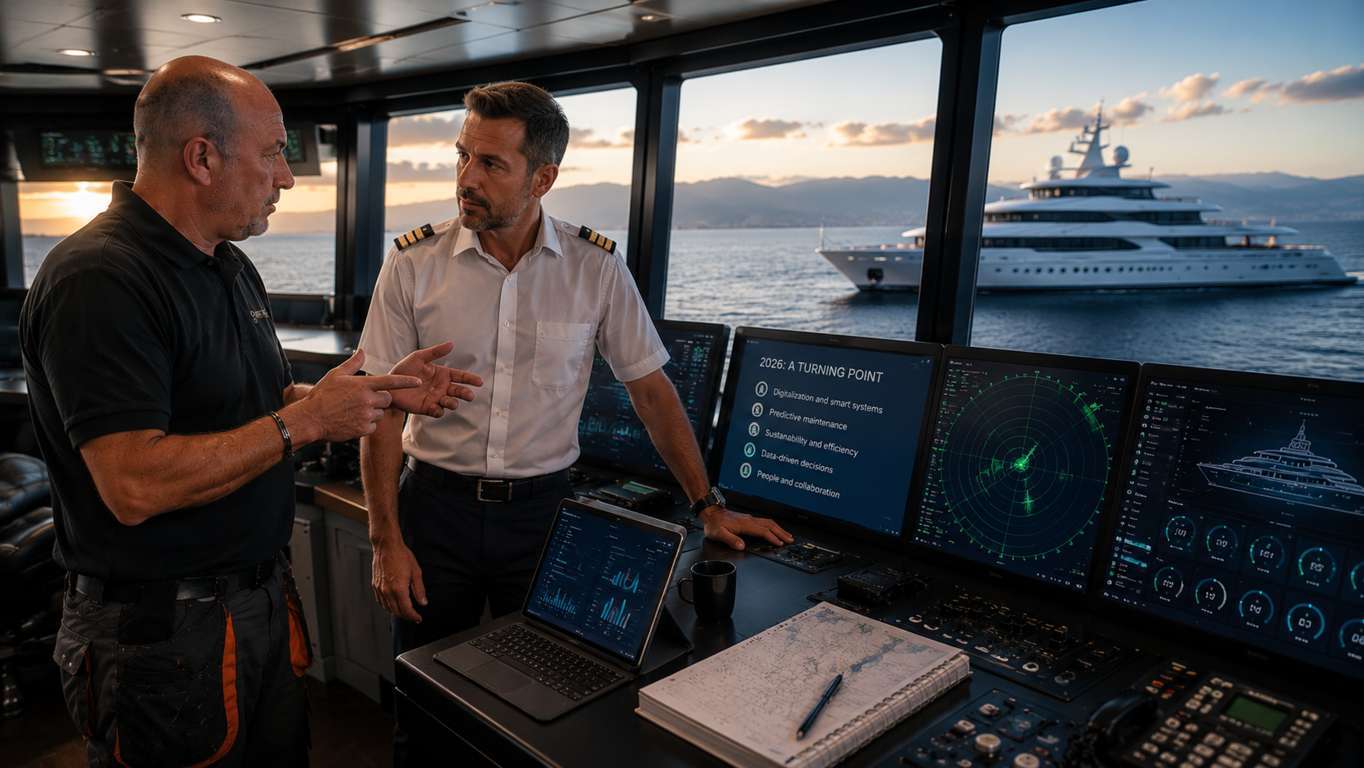
At the same time, the maritime industry is under increasing pressure to reduce environmental impact. The International Maritime Organization’s 2023 GHG Strategy aims for net-zero greenhouse gas emissions from international shipping by or around 2050, with a target to reduce carbon intensity by at least 40% by 2030 compared with 2008.
Although private yachts do not always follow the same operational profile as commercial shipping, the regulatory direction of the maritime sector is clear: owners, managers and technical teams must prepare for stricter environmental, efficiency and reporting expectations.
More complex vessels require more specialized oversight
Modern mega yachts are floating technical ecosystems. Propulsion, stabilizers, HVAC, electrical systems, navigation equipment, hotel loads, water treatment systems, digital controls and safety systems must work together without interruption.
As yachts increase in size and complexity, the margin for unmanaged technical risk becomes smaller. A minor failure in one system can affect guest experience, charter availability, safety or planned itineraries.
This makes preventive technical management far more valuable than reactive maintenance.
Regulation is becoming part of daily yacht operations
Compliance is no longer something to review only before inspections. It is increasingly connected to everyday operations, including:
- Fuel use
- Emissions
- Maintenance records
- Safety systems
- Crew procedures
- Equipment certification
- Class and flag requirements
The IMO approved draft net-zero regulations in 2025 as part of the development of a global framework combining fuel standards and emissions pricing for shipping. While regulatory timelines can evolve, the direction of travel remains toward stronger emissions governance across the maritime sector.
For mega yachts, this means technical teams need to monitor not only machinery performance but also regulatory exposure.
Owners expect efficiency, transparency and control
Owners and family offices increasingly expect professional reporting, predictable budgets and clear technical recommendations. Technical management must therefore provide more than problem-solving. It must deliver visibility.
In 2026, strong yacht operations will depend on:
- Clear maintenance planning
- Cost tracking
- Risk forecasting
- Supplier coordination
- Transparent technical reports
- Evidence-based decisions
A reliable technical partner helps owners understand what is urgent, what can be planned and what should be avoided.
Key trends shaping mega yacht operations in 2026
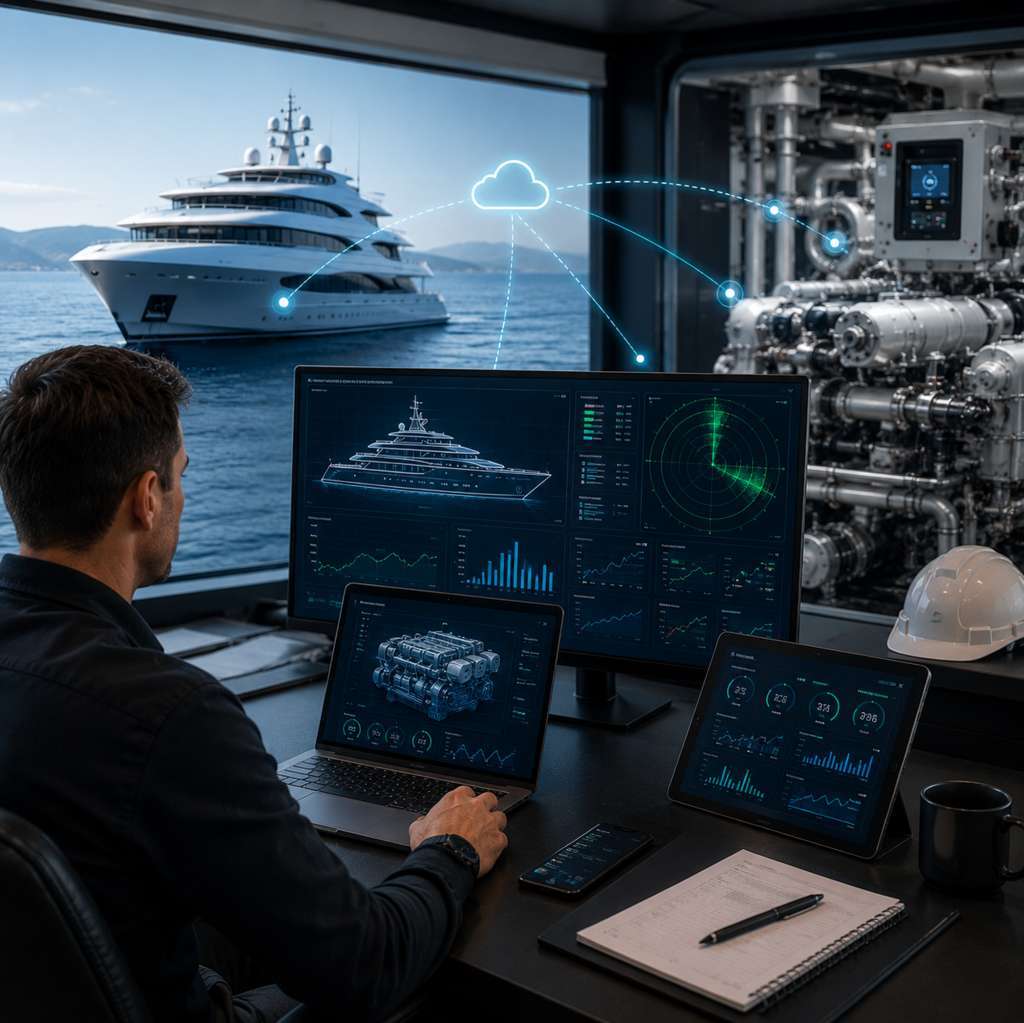
Predictive maintenance and remote monitoring
Predictive maintenance is becoming a core element of high-quality superyacht management. Instead of waiting for equipment to fail, technical teams use data from machinery, vibration, temperature, pressure and operating hours to identify early warning signs.
Remote equipment and machinery monitoring can help detect anomalies before they become critical failures. This is especially valuable during charter seasons, long crossings or periods where the yacht operates far from major technical hubs.
For owners, the benefit is simple: fewer surprises, less downtime and better control over maintenance costs.
Sustainability and alternative fuel readiness
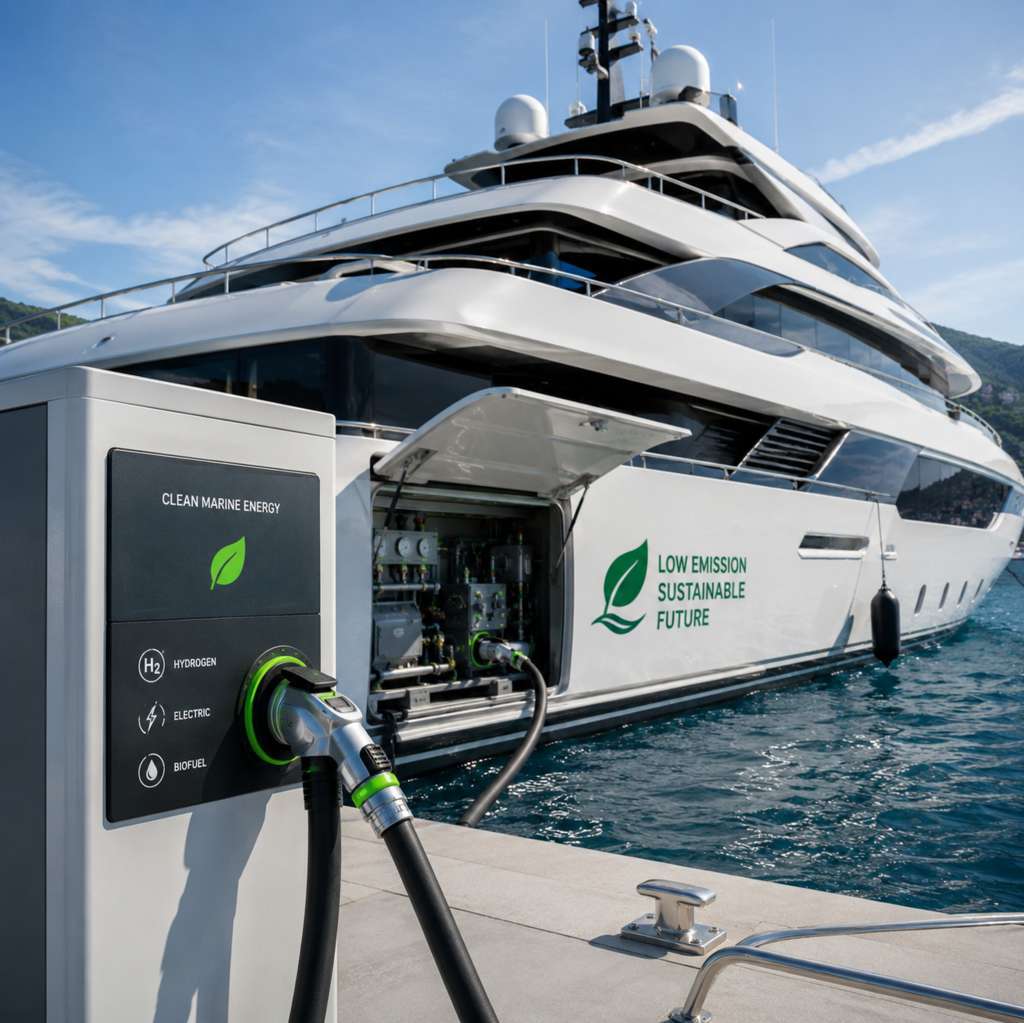
The transition to cleaner operations is influencing yacht design, refit planning and technical management. Even when a vessel is not ready to adopt alternative fuels, owners and managers must consider efficiency measures such as:
- Shore power compatibility
- Energy optimization
- Hull and propeller performance
- Efficient HVAC operation
- Fuel monitoring
- Emission control technologies
- Waste and water management systems
The IMO’s strategy includes a level of ambition for zero or near-zero GHG emission technologies, fuels and energy sources to represent at least 5%, striving for 10%, of energy used by international shipping by 2030.
For mega yachts, the key issue is not only compliance. It is also reputation, operational efficiency and future-proofing.
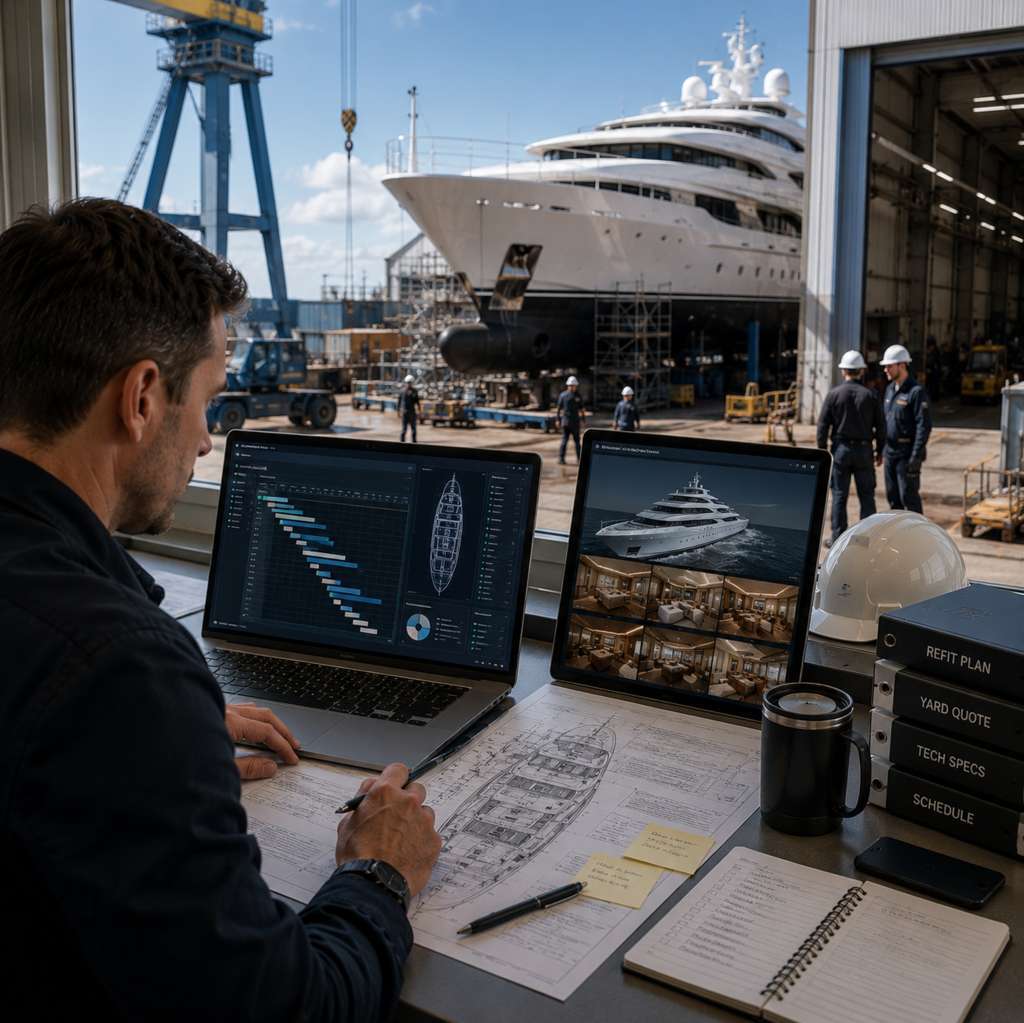
Smarter refit and shipyard planning
Refit periods are among the most critical moments in the lifecycle of a mega yacht. Poor planning can lead to delays, budget overruns and operational disruption.
In 2026, successful refit management will require:
- Clear technical specifications
- Accurate work lists
- Pre-yard inspections
- Supplier coordination
- Class and flag planning
- Quality control
- Cost monitoring
- Sea trial preparation
- Documentation after completion
A technical consultant or external technical office can act as an independent layer of control between the owner, crew, shipyard and suppliers.
Data-driven decision-making
Technical decisions are becoming more evidence-based. Instead of relying only on experience or visual inspection, yacht technical management increasingly uses:
- Machinery data
- Oil analysis
- Vibration readings
- Thermal measurements
- Maintenance history
- Sea trial performance
- Class reports
- Survey findings
This does not replace onboard expertise. It strengthens it.
The best technical decisions combine experienced engineering judgement with reliable data.
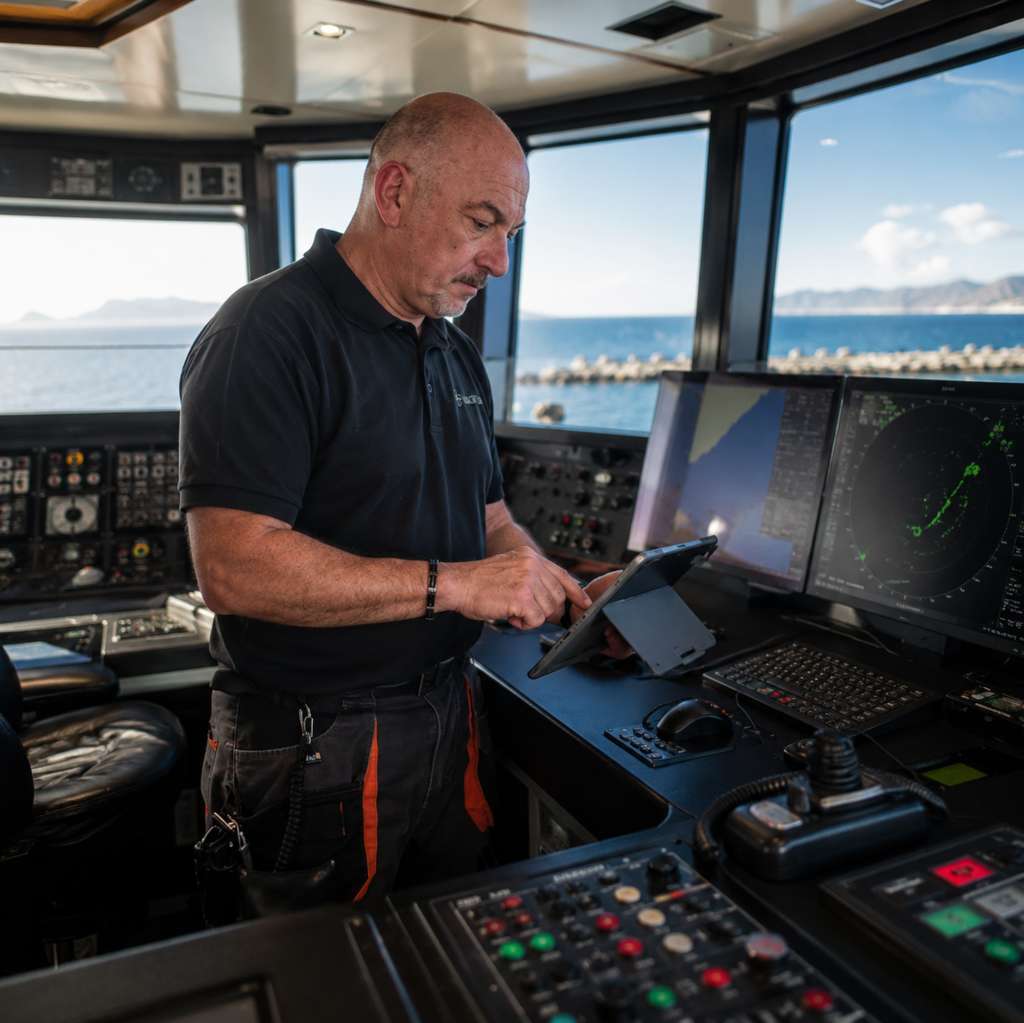
Stronger collaboration between crew and shore-based teams
Captains and chief engineers are under constant operational pressure. External technical management support can reduce that burden by helping with planning, supplier coordination, compliance documentation and complex troubleshooting.
This model is already common in commercial shipping, where shore-based technical superintendents support vessels throughout their operational life. In the superyacht sector, it is becoming increasingly relevant as vessels become larger and more technically demanding.
The role of yacht technical consultancy
Yacht technical consultancy provides independent expert support for owners, captains and management companies. It is especially useful when a project requires technical depth, neutral assessment or additional capacity beyond the onboard team.
A yacht technical consultant can help with:
- Technical audits
- Maintenance plan review
- Refit planning
- Shipyard supervision
- Incident assessment
- Machinery troubleshooting
- Sea trial coordination
- Class and flag communication
- Technical reporting for owners
The value lies in reducing uncertainty. A consultant helps translate technical complexity into clear actions, priorities and decisions.
What owners and captains should prioritize in 2026
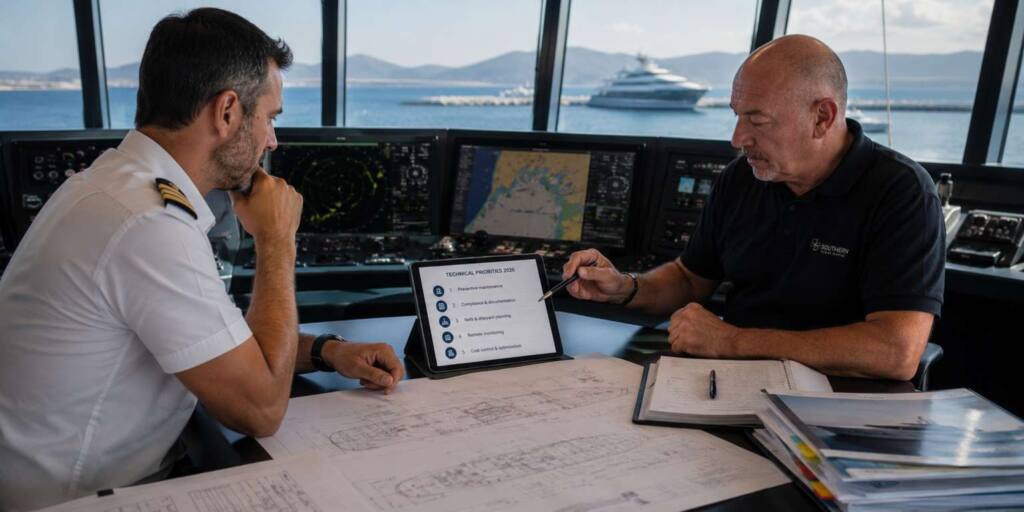
Mega yacht owners and captains should focus on five priorities:
- Preventive maintenance over reactive repair
Waiting for failures increases costs and operational risk. - Reliable technical documentation
Maintenance records, certificates, reports and inspections should be easy to access and audit. - Refit planning before shipyard entry
The more precise the preparation, the lower the risk of delays and unexpected costs. - Remote monitoring and condition-based maintenance
Data can help identify technical issues earlier and support better decisions. - External technical support when needed
A specialized technical partner can provide expertise, independence and operational continuity.
Frequently asked questions
What is the difference between yacht management and yacht technical management?
Yacht management can include administration, crew, finance, compliance and operations. Yacht technical management focuses specifically on the vessel’s engineering condition, maintenance, inspections, technical performance, refits and operational reliability.
Why is technical management important for mega yachts?
Mega yachts are complex, high-value assets. Technical management helps prevent failures, control maintenance costs, maintain compliance, protect safety and preserve the vessel’s long-term value.
When should a yacht owner hire an external technical consultant?
An owner should consider external technical consultancy before a refit, during technical disputes, after recurring equipment failures, before purchase, during sea trials or whenever the onboard team needs specialized engineering support.
How does remote monitoring support yacht operations?
Remote monitoring tracks machinery and equipment data in real time or near real time. It helps identify abnormal patterns, reduce downtime and support preventive maintenance planning.
What will define successful superyacht management in 2026?
Successful superyacht management in 2026 will depend on proactive planning, technical expertise, regulatory awareness, data-driven maintenance and close collaboration between onboard crews and shore-based specialists.
The future of mega yacht technical management is more strategic, more data-driven and more closely connected to compliance, sustainability and operational excellence.
For owners, this means technical support should not be treated as an emergency resource. It should be part of the vessel’s long-term management strategy.
For captains and chief engineers, it means having access to the right expertise at the right time.
For the superyacht industry, it means that premium yacht operations will increasingly depend on professional technical structures capable of protecting safety, performance and value.
In 2026, the most successful mega yachts will not be those that simply react quickly to problems. They will be the ones that anticipate them.
